



In this article, I will share my experience presenting a blockchain-based CBDC at the ETHBelgrade main stage and the insightful comments I received. Since this article will be lengthy, I will divide it into two parts. This was my first visit to Belgrade, and I was truly impressed by the hospitality I experienced. I would like to extend my gratitude to all my friends, especially my longtime friend Marko, who stayed in touch with me throughout this trip.
This summer, I had the opportunity to speak with senior executives from many banks, public institutions, and technology solution providers in regional capitals such as Abu Dhabi, Riyadh, Belgrade, and Ankara. The digitalization of finance, accelerated by the Washington-based GENIUS and CLARITY Acts, is affecting the entire world in waves, and executives in these cities want to understand how this new monetary system will affect them and how they should position themselves accordingly. The central question is what must be done to build our own digital asset ecosystems in harmony with American digital assets, especially stable dollars that are globally accessible through blockchain networks such as Ethereum, Tron, and Solana. Our thesis at node101 for integrating the rest of the world into this new order in the most appropriate way is blockchain-based local CBDCs.
Blockchain-based CBDCs were discussed in Belgrade
For many years, the largest blockchain event in the Balkans has been ETHBelgrade ( https://ethbelgrade.rs/ ). This year’s event, as in previous years, took place in a new format with a large audience and strong international participation. In the same venue complex, not only ETHBelgrade but also the Solana Summit was held. Over two days, many researchers, academics, and professionals working in DeFi and finance met one another and listened to inspiring talks.
This year, during my first visit to ETHBelgrade, I also had the opportunity to give a Main Stage presentation titled ‘From Lira to Ledger: Where Blockchain-Based CBDCs Fit in a Stablecoin World’.

In my presentation, I shared our original work on how the Turkish lira can be positioned within the global monetary system that is being reshaped by regulations such as GENIUS and CLARITY.
Focused on the role that the Turkish lira and Turkish assets can play in a future where the new dollar regime is built on blockchain infrastructure, and where real-world assets, from real estate to financial assets, are increasingly tokenized and carried into the digital world. This transformation is not only a matter for Türkiye, but a global issue affecting all countries, including Serbia, Arabia, and Europe, regardless of nationality.
In the first part of the presentation, I discussed where the monetary system stands today and how it may evolve in the future. Then explained the approach we have developed to provide the Turkish lira with a strong infrastructure platform, to reinforce its use in the 21st century, and to enable the Turkish lira and Turkish assets to interact with the new monetary regime in the healthiest possible way.
CBDCs were the solution of the last decade; blockchain-based digital currencies are the solution of this century
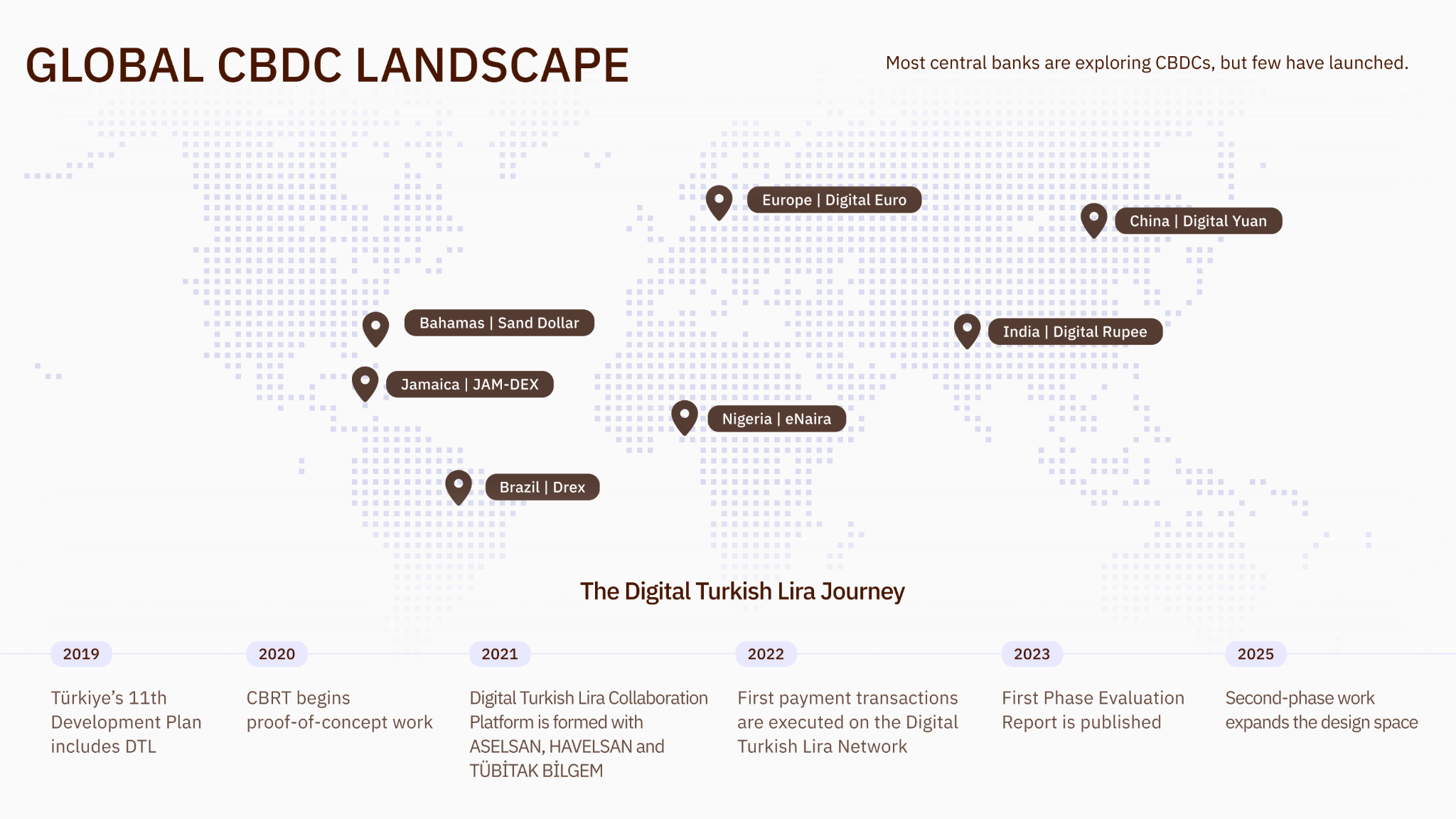
Throughout the 2010s, the decline in cash usage across most BIS-member central banks, the spread of digital payment systems, and the increasingly visible need for these systems to rely on more resilient settlement infrastructures brought the idea of CBDCs to the forefront globally. In the same period, the need to settle real-world assets expected to be tokenized on secure, publicly backed, and scalable infrastructures further strengthened this search.
As part of this trend, visible across different parts of the world from Brazil to the European Union and from Russia to China, Türkiye also began taking its first steps toward the Digital Turkish Lira through international coordination. Although the idea of a Digital Turkish Lira first entered written records in 2018, more than eight years later it has still not fully reached a concrete implementation reality.
Over these eight years, world politics, the global economy, and technology have changed significantly. Naturally, the meaning, function, and feasibility of CBDCs have also been affected by this transformation. While confidence in CBDCs and the benefits these technologies promise have been questioned from various angles, blockchain-based financial products and alternative digital asset infrastructures have increasingly emerged as stronger options.
Toward a new global monetary regime with stablecoins...
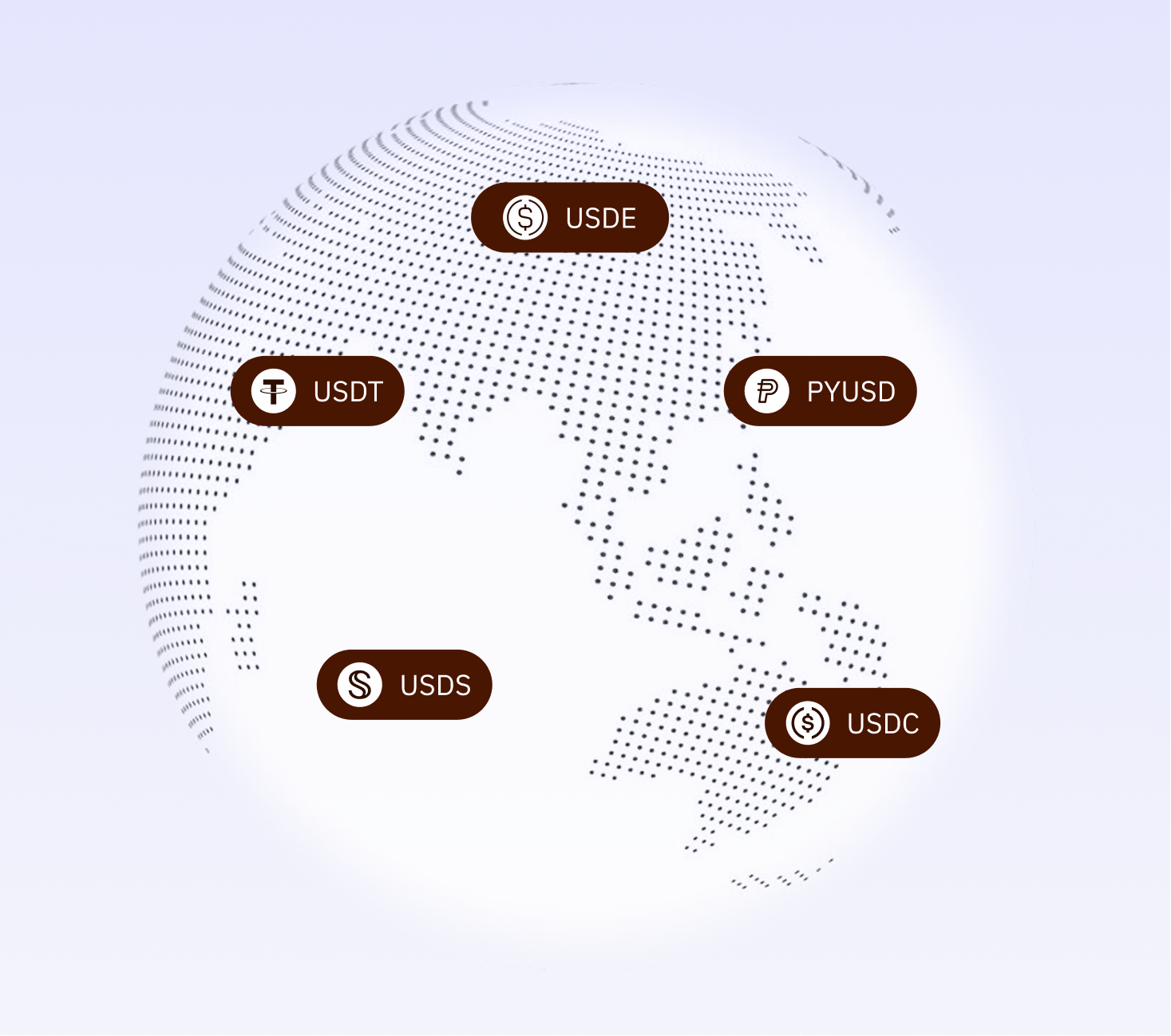
Billions of people living in different parts of the world have long faced various difficulties in accessing the American dollar easily and reliably. High inflation in local currencies, fiscal indiscipline in private and public institutions, and other macroeconomic factors have driven a flight to the dollar; yet high commission rates, black-market exchange rates, and other frictions have made access to dollars difficult even in countries where access to the banking system is relatively easy.
Stablecoins, which entered our lives in the late 2010s, made it possible for anyone with internet access to reach dollar-like digital assets much more easily, thanks to their fixed values pegged to fiat currencies. Demand for these stablecoins issued on blockchains has grown rapidly over time on a global scale. Given the level of efficiency that blockchain technologies have reached today, even within the United States it has become cheaper and faster to transfer dollars from New York to California via stablecoins than through traditional banking methods.
While blockchain-based financial products have advanced technologically to this extent, while their user bases have reached hundreds of millions of people and their total market volumes have climbed into the hundreds of billions of dollars, central bank digital currency projects, by the mid-2020s, still appear to be struggling to move beyond limited pilots and test phases.
Stablecoins gain legitimacy with the GENIUS Act and indispensability with the CLARITY Act

Since the 2024 election cycle, the direction of monetary policy in the United States, especially the debate over whether interest rates should be lowered, has become one of the important items on the political agenda. Lower policy rates would allow the American government to borrow at a lower cost and sustain its spending capacity more comfortably. Yet because of the Fed’s independent structure, the political pressure placed on the Fed Chair and board members did not produce a direct result in the short term.
At precisely this point, stablecoins emerged as a new channel that could both reduce the United States’ borrowing costs and increase global access to dollar liquidity. By giving payment stablecoins a federal regulatory framework and requiring these assets to be backed largely one-to-one by American dollars or short-term U.S. Treasury securities, the GENIUS Act turned stablecoin issuers into a natural and continuous source of demand for the American debt market. Indeed, today more than 350 billion dollars in total stablecoin issuance is backed by three-month short-term U.S. Treasury bills. This means more than 1.2 trillion dollars in additional annual borrowing capacity. To put it more clearly, one study shows that if 350 billion dollars in stablecoin issuance backed by three-month bills were realized, short-term U.S. Treasury bill yields could fall by approximately 200 to 250 basis points (2 to 2.5 percent), creating direct annual interest expense savings of approximately 7 billion to 8.75 billion dollars for the U.S. Treasury on that volume alone. [1]
As can be seen, this new structure has enabled the U.S. administration to position the stablecoin market, which has already reached hundreds of billions of dollars in global volume, as an important investor base for short-term Treasury securities. As the endless global demand for dollars and American Treasuries becomes more accessible through blockchain infrastructure, that demand also adds further depth to the U.S. borrowing market.
This development has not only financial but also political consequences. Theoretically, the Fed’s authority over the policy rate remains intact; in practice, however, the stablecoin market creates an alternative and increasingly powerful channel for the circulation of dollar liquidity. The fact that U.S. Treasury securities are regarded by global public opinion as among the safest assets also supports this mechanism.
As stablecoins gain a clearer legal footing and digital asset markets become institutionalized through regulations similar to CLARITY, a new monetary regime is becoming visible in which the dollar circulates globally not only through the traditional banking system and central bank channels, but also through blockchain-based financial networks. Even if this does not eliminate long-term dependence on Fed dollars entirely, it may lead to the emergence of new centers of power in the United States, formed by private enterprises, around the production, distribution, and access channels of dollar liquidity.
A new American dream

A future in which anyone living anywhere in the world can access the American dollar from where they sit appears, at first glance, quite “democratic.” Moreover, because these dollars are issued as stable dollars on public blockchain networks such as Ethereum, Solana, Avalanche, and Tron, which have validators distributed across different parts of the world, the structure may even look from the outside like a decentralized field of financial freedom.
A new, liberal American dream: digital dollars for everyone, financial access for everyone.
But appearance and reality are not always the same. At first glance, one might think that the Fed-centered distribution of dollars is being decentralized through private companies and public blockchains. Yet when we look a little deeper, the balance of power in the new digital asset regime points to a far more centralized structure than assumed. While today’s dollar regime operates relatively through the Fed, the Treasury, and institutional checks and balances, the new stable dollar regime allows the president sitting in the White House to exert much more direct and sharper influence over the global financial order. But how is this possible?
With the GENIUS Act, the U.S. administration gains a new channel through which it can strengthen demand for Treasury securities via stablecoin issuers. Through the Treasury Secretary appointed by the president, a continuous and globally growing buyer base can be created for short-term U.S. Treasury securities issued by the Treasury, through stablecoin companies. This creates a new architecture that reduces the practical need for the Fed in the circulation of dollar liquidity.
Moreover, this new regime creates not only a financial but also a field of political power. The fact that a stable dollar issuer operating in the U.S. market is subject to the American regulatory framework gives Washington significant political leverage. For example, a U.S. president could appear before the cameras one morning and say, “Tron is a Chinese network; we do not want stable dollars circulating on that network.” If such political will emerged, stablecoin issuers headquartered in the United States might have little room for maneuver other than moving their stable dollars on Tron to other networks.
At this point, we must ask: when it comes to the dollar, to what extent can we really speak of the decentralization of blockchains?
In the new digital dollar regime shaped by regulations such as GENIUS and CLARITY, the U.S. government is increasingly consolidating its power to determine who can issue stablecoins, which individuals, institutions, and countries can use these assets in commerce, on which networks they can circulate, and which reserves can support them. In other words, while political influence over the dollar deepens, this new regime is being built under the appearance of decentralization.
Ultimately, what stands before us is a digital dollar architecture that appears decentralized, but is in reality more centralized, more controllable, and far more politically intensive.
And in this dream, there is no room for CBDCs!

As can be seen, while the U.S. dollar is being privatized and spread across the world through issuers such as Circle and Tether, the actors in this transformation will not be limited to blockchain-focused companies. Alongside American Big Tech companies such as Amazon, Tesla, and Google, major financial institutions, especially Morgan Stanley, Citi, and others, will also become part of this private dollarization wave and add new layers of profitability to their businesses.
In this process, the U.S. government also gains a significant advantage. Thanks to global demand for stable dollar assets, it finds a way to lower borrowing costs while building a new channel through which it can spread the inflationary burden of the dollar to the rest of the world. In this new regime, the dollar becomes more accessible than ever; and as digital asset markets mature through regulations similar to CLARITY, the ability of users holding stable dollars to earn yield may make them more attractive than ever.
In such a future, the question becomes unavoidable: will there really be room for central bank digital currencies, which we call CBDCs? More importantly, will the Fed be allowed to develop its own digital dollar as a CBDC?
The current policy direction of the United States largely answers this question with a “no.” The executive order published in January 2025 and the “Strengthening American Leadership in Digital Financial Technology” report published in July 2025 show that the United States has taken a clear policy position against CBDCs both domestically and globally, and explicitly states that it will not permit CBDC projects either within the United States or in overseas countries. The American administration prefers the development, expansion, and use of dollar-backed stablecoins in ways that strengthen global dollar dominance, rather than central bank digital currencies. [2]
So how does this affect our CBDC project, namely the Digital Turkish Lira?

If the infrastructure of the Digital Turkish Lira project is not reconsidered in light of this new American digital asset regime, the project may become a product of an old world before it is even born. Therefore, what must be done today is not to abandon the Digital Turkish Lira, but to redesign it as a blockchain-based infrastructure that is compatible with the new global financial architecture and strengthens the use of the Turkish lira in the digital economy.
In other words, the Digital Turkish Lira should no longer be treated merely as a central bank digital currency project; it should be approached as a strategic infrastructure question that will position the Turkish lira, Turkish assets, and Türkiye’s financial sovereignty within the new digital dollar regime.
As node101, and also personally, we believe that the digitalization of the Turkish lira is the most important project to be undertaken for the future of the lira in the 21st century. As people who have long been thinking about these issues, asking questions, listening to different perspectives from various parts of the world, and speaking directly with those building this new regime, we are publicly discussing our hypotheses for moving the Turkish lira from a spreadsheet-based lack of infrastructure to a blockchain-based infrastructure. In my next article, I will explain in detail what our thesis for a blockchain-based Digital Turkish Lira infrastructure looks like and what kind of economic contribution it could make, first to the Turkish economy, then to the economies of allied countries, and ultimately to the world economy.
Thank you for reading. I look forward to your views and criticism.
References
[1] Liang, Nellie, and Brent Neiman. 2024. “Stablecoins after GENIUS: Macroeconomic and Financial Risks.” Brookings Institution Working Paper, September 20. brookings.edu.
[2] The White House. “Strengthening American Leadership in Digital Financial Technology.” The White House. Accessed September 6, 2026. https://www.whitehouse.gov/crypto/.
Inspiring one ⚡️
Stable dollars can widen access, but the on-ramp and off-ramp are where the lived experience is decided. It is worth measuring who bears the compliance friction and who gets the benefit of programmability.